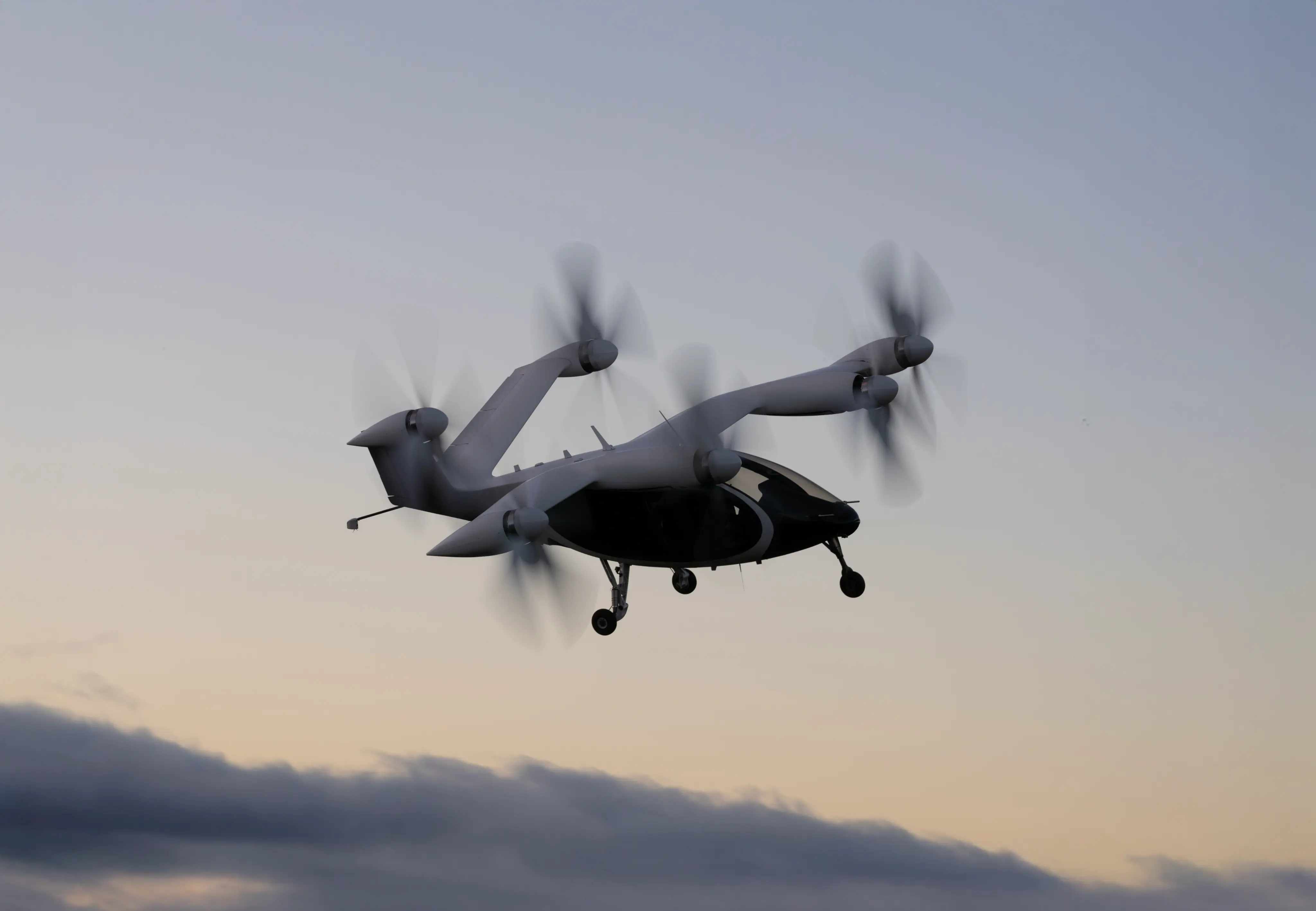
Our sector-leading progress is underpinned by Joby’s unique position as a vertically-integrated aviation company, bringing together everything from aircraft design to manufacturing and operations under the same roof. That organizational philosophy also grants us the opportunity to instill high standards for quality, safety, sustainability, and social impact across all aspects of our business.
Last year, we continued to take steps to ensure those high standards translate into positive impacts on the communities we are a part of, both today and in the future. These steps are reflected in our 2023 Impact Report, the second such annual report Joby has published.
As our CEO and Founder, JoeBen Bevirt, wrote in 2021 and recently updated, Joby is committed to helping protect our precious planet by pulling forward the timeline for true zero-emissions solutions. Along the way, we intend to improve the lives of the people living on our planet – whether through the mobility options provided by our service or our commitment to ensuring a safe working environment for Joby employees.
Each year, we’ll transparently report on our company’s impact across Safety, Environment, and People and Community – all of which are underpinned by our commitment to responsible corporate governance and robust compliance procedures. Below we’ve captured some highlights and you can access the full 2023 Impact Report here.
A Joby production prototype electric air taxi flying in front of Mount Fuji in Shizuoka, Japan. Photo: Joby Aviation Our Sustainability efforts
Safety
- Enterprise Safety Management System: We are actively developing and implementing an enterprise-wide safety management system (SMS) to ensure safety oversight and improvement in all areas in line with our type certification efforts.
- Aircraft Design: The safety of our pilots, passengers and surrounding communities has been a guiding principle in the design and development of our aircraft from the very beginning. Compared to traditional single-propeller airplanes and helicopters, the Joby aircraft has greater redundancy across flight-critical systems to guard against failure.
- Flight Operations: We had two flight operations safety programs accepted by standards-setting organizations: the International Business Aviation Council and the Federal Aviation Administration’s Voluntary Safety Management System (SMS) Program for Part 135 Air Carriers.
- Team member safety: We conducted over 4,000 hours of team member training on key Occupational Safety and Health Administration (OSHA) principles.Enterprise Safety Management System: We are actively developing and implementing an enterprise-wide safety management system (SMS) to ensure safety oversight and improvement in all areas in line with our type certification efforts.
- Aircraft Design: The safety of our pilots, passengers and surrounding communities has been a guiding principle in the design and development of our aircraft from the very beginning. Compared to traditional single-propeller airplanes and helicopters, the Joby aircraft has greater redundancy across flight-critical systems to guard against failure.
- Flight Operations: We had two flight operations safety programs accepted by standards-setting organizations: the International Business Aviation Council and the Federal Aviation Administration’s Voluntary Safety Management System (SMS) Program for Part 135 Air Carriers.
- Team member safety: We conducted over 4,000 hours of team member training on key Occupational Safety and Health Administration (OSHA) principles.
Governance
- Aircraft Design: The safety of our pilots, passengers and surrounding communities has been a guiding principle in the design and development of our aircraft from the very beginning. Compared to traditional single-propeller airplanes and helicopters, the Joby aircraft has greater redundancy across flight-critical systems to guard against failure.
- Flight Operations: We had two flight operations safety programs accepted by standards-setting organizations: the International Business Aviation Council and the Federal Aviation Administration’s Voluntary Safety Management System (SMS) Program for Part 135 Air Carriers.
- Team member safety: We conducted over 4,000 hours of team member training on key Occupational Safety and Health Administration (OSHA) principles.
“Today’s milestone fundamentally underpins our approach to bringing our aircraft to markets around the world. We applaud these authorities for their efforts to coalesce around a common approach to approving eVTOL in their respective countries. ”
—JoeBen Bevirt, Founder and CEO
The jet age brought incredible speed and connectivity for longer distances, but humanity yearns for something different: a future where flight is woven into our daily lives, quiet, emission-free, and seamlessly integrated into our communities. That's the promise of electric vertical takeoff and landing (eVTOL) aircraft, and Joby Aviation is bringing this revolutionary new type of aircraft to the world.
In the U.S., the Federal Aviation Administration (FAA) meticulously certifies every aspect of a new design, ensuring it can operate safely in various conditions. Just as the U.S. has these rigorous requirements, every nation has its own aviation authority. Differences in certification standards can make it difficult to share groundbreaking technology with new markets.
Joby recognized this challenge early. When we began our formal certification journey with the FAA in 2018, we simultaneously engaged with key countries worldwide. Our goal was clear: ensure that the pioneering safety work we conducted with the FAA would help set a global standard, minimizing duplication and accelerating acceptance. We applied to have our FAA certification efforts validated in crucial markets like the UK, Japan, and Australia.